The Spitfire · https://thespitfire.news/features/interview-stars-on-sunday-book-55949

Interview: Stars on Sunday Book
21.05.26, 09:01 Updated 21.05.26, 09:03

Fred Atkins
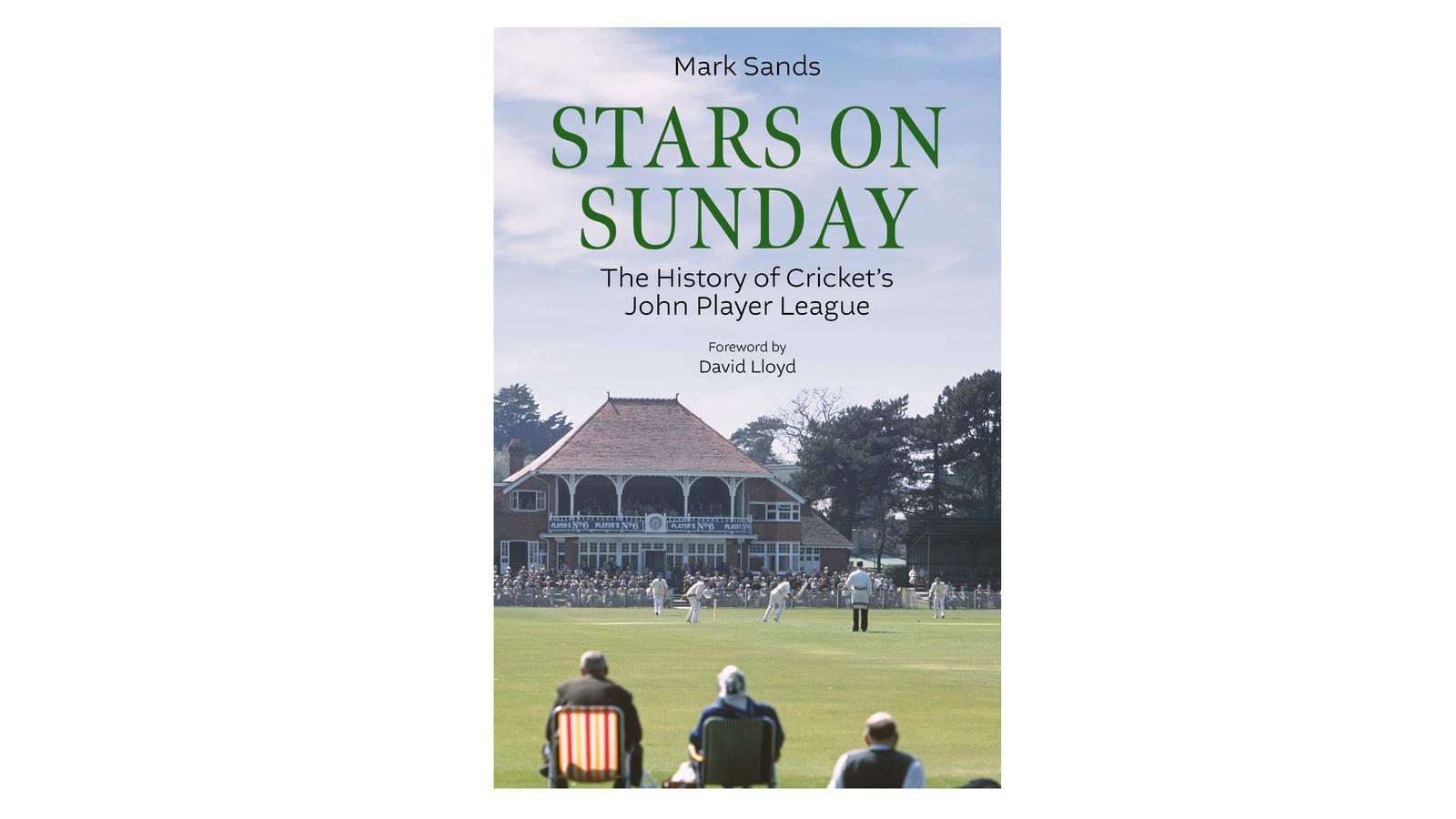
Mark Sands has written a book called Stars On Sunday, about the John Player League, a competition Kent did well in, winning it on three occasions in the 1970s. He talks to Fred Atkins about the inspiration for the book and how the one-day game has evolved.
FA: First of all, what made you want to do it?
MS: The first county cricket match I ever saw was a John Player League game at Old Trafford (my abiding memory is Clive Lloyd hoisting a huge six onto the Warwick Road rail tracks), so the competition has always held a place in my heart. The regular weekly coverage on BBC2 was also an important factor as it meant you quickly became acquainted with all of the county sides, and there were plenty of star players in all of the sides, with the England and overseas players turning out each Sunday.
The idea for the book was in the back of my mind, and the importance of the JPL to a generation of fans would crop up from time to time (such as in the book 1973 & Me by Colin Babb), but when I overheard a group of Lancashire fans at Blackpool fondly recalling happy memories from watching Sunday League games through the 1970s and 80s, it gave me the final push to crack on and try to capture at least some of what made the JPL such a fantastic competition.
FA: Did David Lloyd take any persuading to write the foreword?
MS: David was definitely my first choice to write the foreword for the book, given his widespread appeal to cricket supporters, but also because he was a member of the Lancashire side that captured the JPL title in the first two seasons. I managed to contact him through a mutual acquaintance and fortunately he was happy to provide a brilliant foreword to the book.
FA: Did you feel it was a neglected competition, given its audience on tv was far bigger than domestic cricket gets today?
MS: There was some initial resistance to the competition from cricket purists and indeed, some of the players (Brian Close, for one, was not impressed with the format - though he captained both Yorkshire and Somerset and made over 100 appearances) but it quickly established itself as a genuine domestic trophy.
The JPL attracted huge crowds - over 30,000 saw Lancashire defeat Yorkshire to take the title in 1970 - and was a real hit with supporters old and new. Everything seemed to fall into place, it was definitely a case of perfect timing: the shorter format fitting perfectly into the Sunday afternoon slot when there was little competition from other leisure activities (shops, pubs, cinemas etc all closed and not much else in the way of live professional sport) and the certainty of seeing a result, weather permitting, appealing to fans who had been put off somewhat by the Championship's longer format which had been somewhat attritional through the 1960s.
"The TV audience was vital, the regular Sunday slot on BBC2 became a must watch ..."
The TV audience was vital, the regular Sunday slot on BBC2 became a must watch, and the fact the full match was shown was also key (many fans scoring the match as they watched). That changed from 1981 onwards, with the advent of Sunday play in Test cricket, and the move to Sunday Grandstand which broadcast other sporting events such as golf or motor racing, cutting back and forth from the Sunday League cricket which interrupted the flow.
World Series cricket brought coloured clothing, floodlit cricket etc from the late 70s, which inevitably were then adopted for domestic limited overs games here, but when many people compare today's domestic scheduling with the days of the JPL, there is a view that those seasons 40-50 years ago were a 'golden age' for county cricket.
FA: It's striking how many grounds were used, in so many different places: do you think cricket is missing a trick by allowing all these outgrounds to fall out of use?
MS: I am a huge supporter of outgrounds for county cricket, I think it is a much better fit in terms of atmosphere and occasion. I understand the cost implications of hosting matches away from the county HQs, but feel there must be space made in the calendar for regular outground, or festival, cricket. Personally, some of my fondest memories of county fixtures are from grounds such as Southport, Blackpool, Scarborough, Aigburth, Chesterfield and Colwyn Bay.
The John Player League visited an incredible 114 venues, with Somerset alone using 12. Kent used 8: Canterbury, Maidstone, Folkestone, Dover, Tunbridge Wells, Gillingham, Blackheath, New Beckenham. The use of outgrounds brought cricket to supporters in the county who would not or could not travel to the main ground, and helped spread the message of the county game.
FA: The scores and run rates are also very different now. Have we stacked cricket too far in favour of the batters?
The scoring rates were around 4 an over at the inception of the competition, although this did show quite a sharp increase when fielding circles were introduced from 1982 (only 2 of the 10 highest innings totals were scored pre 1982).
It did feel like the JPL provided a good, even contest between bat and ball (and undoubtedly led to improvements in fielding standards) whereas watching some shorter format games today can feel like the bowlers are just cannon fodder for the batters to aim for the shortened boundaries on flat pitches (as an aside, for T20 my view is that a team should only have 5 wickets to play with before being "all out"). Kent were the first team to score 200 in the JPL, doing so on the first day of the competition in 1969, hitting 211/6 v Hampshire at Canterbury (in a 70-run victory).
FA: And for younger Kent fans, it might seem difficult to believe how successful we were. Can you imagine a helicopter flying in to Maidstone to deliver a trophy today?
MS: Kent were very successful through the JPL years - winning the title on 3 occasions, 1972, 1973 and memorably in 1976 with an incredible last day of the season saw five teams in contention and Somerset falling only one run short, In terms of most points accrued across the JPL era (1969-86) Kent's 690 put them in second place, behind Essex on 706.Kent do top the table of most JPL wins on television, however, their 28 (from 42 televised fixtures) putting them ahead of Hampshire (26 from 43).Derek Underwood heads the list of JPL wicket-takers with 344 (the same as John Lever, of Essex), John Shepherd and Bob Woolmer also boast over 200 wickets.
John Shepherd is one of only 7 players to achieve a season's double of 400 runs and 20 wickets; he did so in 1971 (415 runs and 26 wickets). During that season, he made the fastest televised fifty, earning him £250 for his 30 ball half century at Northampton. Asif Iqbal twice took the same award: 1973 38 balls v Worcs at Canterbury and 1976 39 balls v Gloucs at Maidstone.With the gloves, Alan Knott lies in third place on the dismissals chart, his 218 (183 catches, 35 stumpings) beaten only by Eifion Jones and Bob Taylor.
Fred Atkins Fred Atkins is a former Kent Messenger sports editor and has written several books, including The Spitfire Diaries, an account of Kent's 2021 season and Monty Panesar's "The Full Monty". He has followed KCCC since 1993 and has covered them for the ECB and Wisden since 2021.